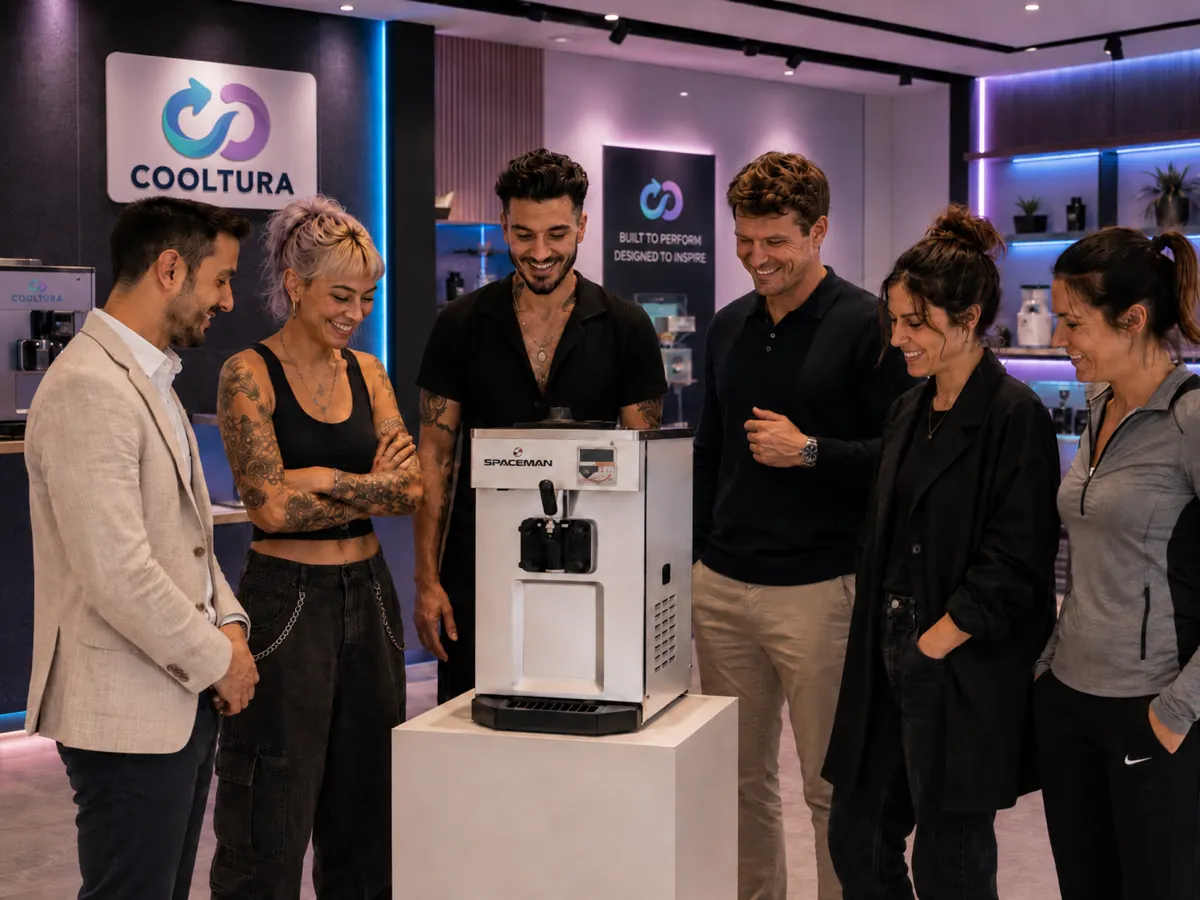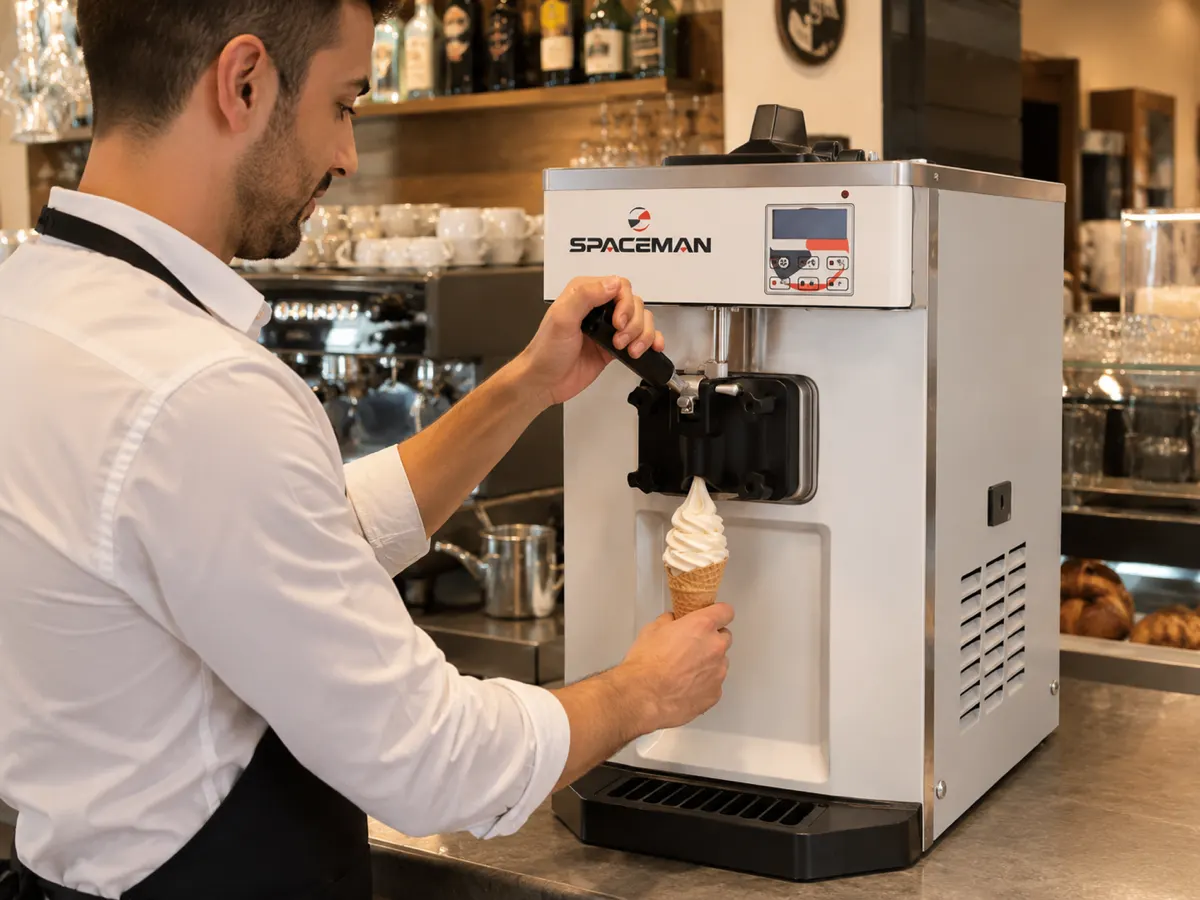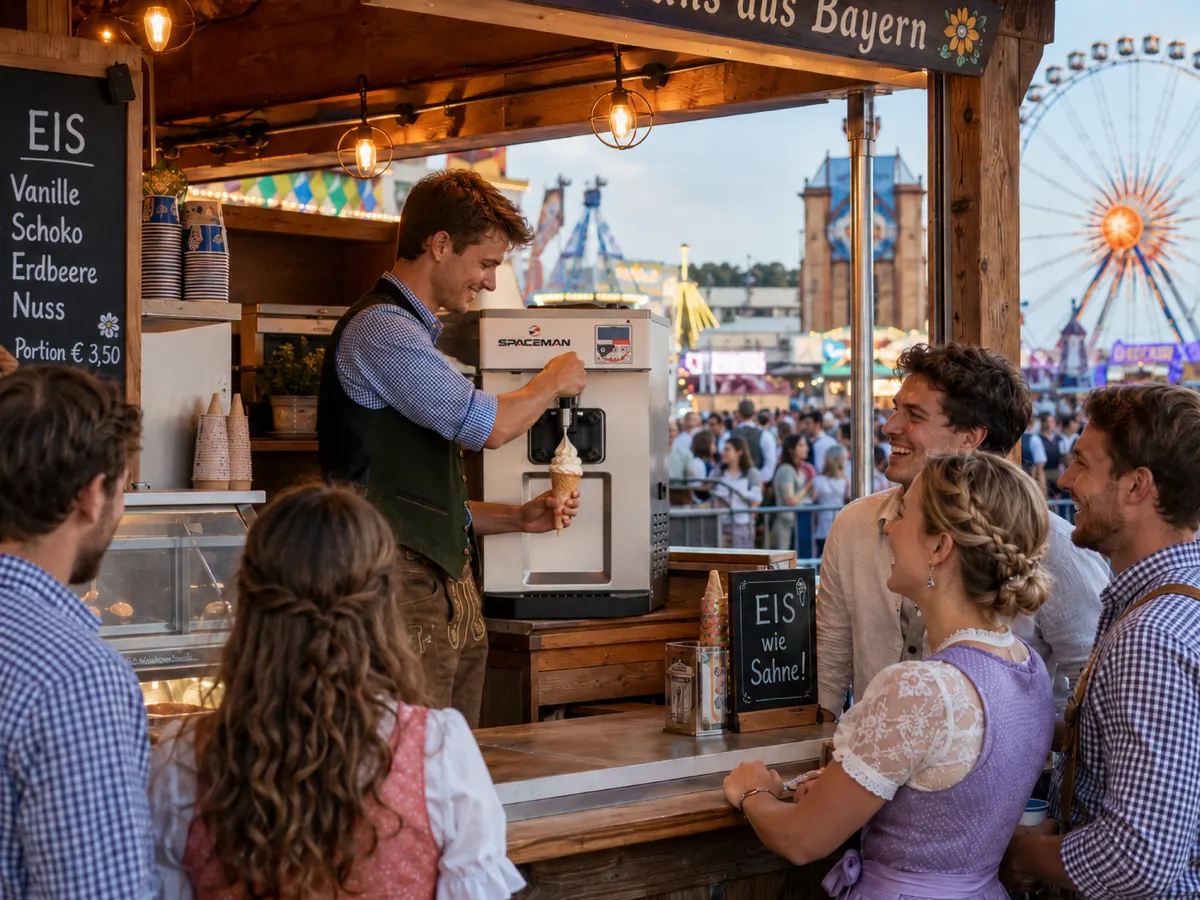
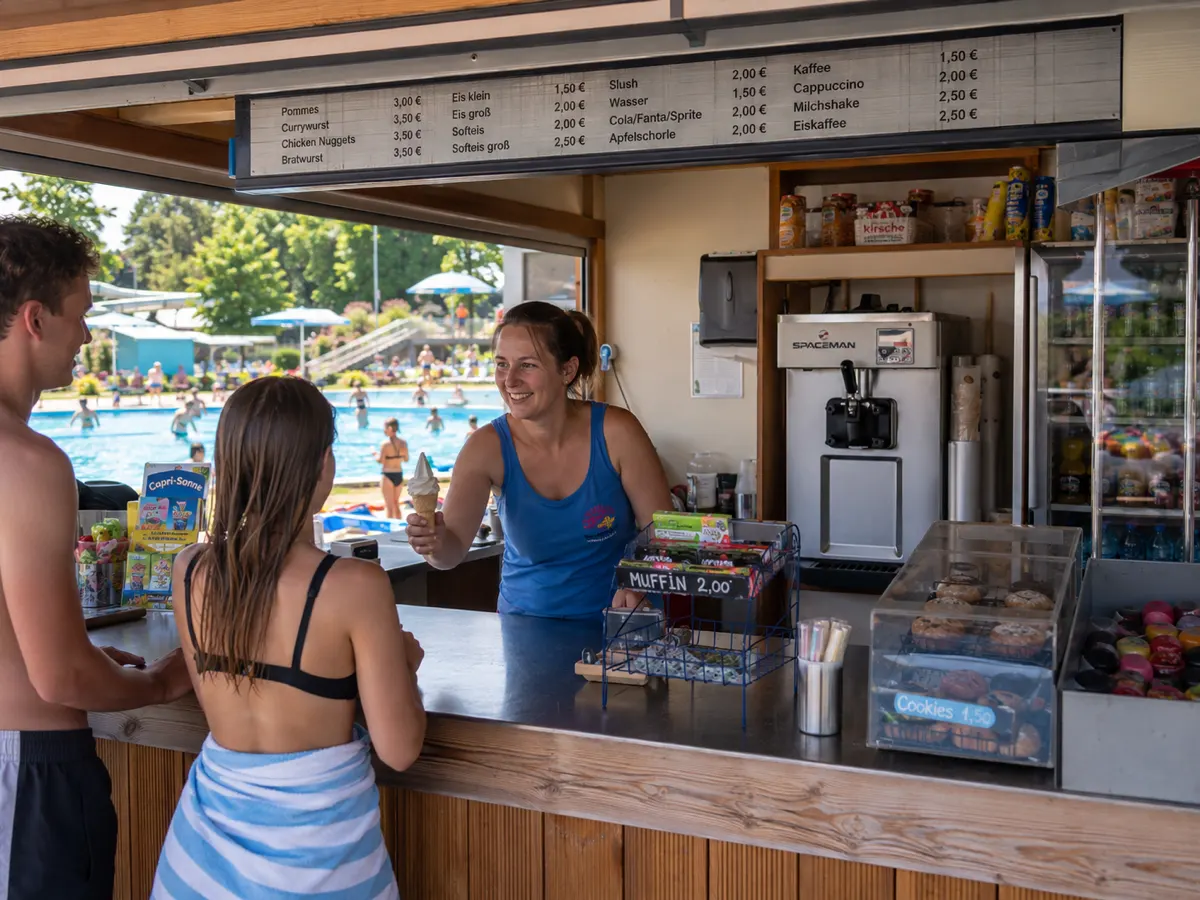
When you read the title of this post, you might think: "Footfall driver, here we go again with the consultant-speak." I get it. But stick with me for a moment – I'll try to explain what I mean by it, and why, in my view, gas stations, bakeries and supermarkets in particular have a massive blind spot when they don't offer soft ice.
Over the last two years I've spoken with around 200 operators from these three industries. With some of them we also sold machines and supported them across two seasons. The numbers we're seeing are honestly surprising, and they don't fit the classic picture most people have of an "ice cream parlor."
What "footfall driver" actually means
Before we get into the industries, a quick word on the concept. A footfall driver is a product or service that attracts customers – not because they need the product, but because it's an appealing offer that steers their path toward you. Once they're there, though, they often buy not just that one product, but other things too.
The classic example: Aldi with its Wednesday special promotions. Nobody drives to Aldi because they desperately need a cordless screwdriver for €19.99. But the promotion lures people in, and along the way milk, bread and chocolate end up in the cart. Footfall driver. Soft ice works exactly the same way. And surprisingly strongly so.
Gas stations: the impulse buy par excellence
Shell, Aral, OMV – the big players led the way. By now you see soft ice machines at the entrance of more and more gas stations. Why? Because it's a perfect impulse buy.
The typical gas station customer fills up their car, goes to the register, sees the machine. On warm days nearly one in three reaches for one, in my experience. With margins of over 90 %, even a moderate turnover is highly profitable. A gas station that sells 100 servings a day (really not much for a well-frequented station) generates €350–400 in gross revenue per day from it, with an operational effort of perhaps 30 minutes of cleaning and refilling.
What many gas station operators don't see: soft ice isn't just the margin on the ice cream. It's also the psychological charge. Whoever walks out of your gas station with a delicious soft ice has a positive last experience. And comes back next time, rather than going to the competition three kilometers down the road, where there's no ice cream.
Bakeries: the perfect afternoon business
Bakeries have a timing problem that every baker knows: in the morning business is booming – breakfast, the coffee break, the lunch rush at midday. From 2 p.m. it goes quiet. Bread isn't being bought anymore, breakfast rolls are done, the cakes have partly been cut into and are sitting around.
Soft ice solves this problem elegantly. Families with children, students after school, people out for a walk, retiree get-togethers – they all come in the afternoon for an ice cream. And very often they also take pastries, a coffee, a slice of cake with them. Cross-selling in its purest form.
I know a bakery in Straubing that increased its afternoon revenue by 60 % in the first season with soft ice. Sixty percent. Purely through the additional footfall that came in thanks to the soft ice offering. The ice cream itself accounted for about a quarter of the increase; the rest was cross-selling revenue: coffee, cake, pastries. In my view, every mid-sized bakery with a reasonable amount of passing trade should have a soft ice machine. There's hardly an investment that pays off so quickly.
Supermarkets and discounters
Here the trend is still young, but it will come. Individual REWE and EDEKA stores are already experimenting with soft ice stations at the exit. The logic is subtler than at gas stations or bakeries: whoever leaves the store with an ice cream in hand has a positive last experience. And is more likely to come back.
I believe that in five years this will be standard. Most supermarkets aren't operationally there yet, because from their perspective soft ice is a fresh product requiring staff, and staff is the biggest challenge in food retail. But modern machines with automatic pasteurization keep the staffing effort minimal. One person refills in the morning, that's it. The machine runs on its own for the rest of the day.
Swimming pools, theme parks, events
Here soft ice is an absolute no-brainer: high visitor frequency, warm temperatures, customers who are already in "indulgence mode" and willing to pay premium prices. A well-positioned soft ice stand can sell 500+ servings on a peak summer day – that's over €2,000 in daily revenue from a machine that costs not much more than €5,000.
My Bavarian example: at the swimming pool in my home village they put in a Spaceman 6210B-C two years ago. The machine paid for itself after 11 sales days. Yes, you read that right: eleven days.
The numbers behind it
A soft ice serving costs €0.25–0.35 to produce. It's sold for €2.90–4.90, depending on location and positioning. That yields margins between 88 % and 95 %. No other convenience product offers comparable returns with so little operational effort.
In my view, that's what's truly decisive. You're welcome to sell cake too, at a 60 % margin. Or coffee, at 70 %. But for the combination of an extremely high margin, low effort and a simultaneous footfall effect, soft ice is currently unbeatable.
Conclusion
Soft ice is more than a dessert. It's a strategic product for any business with passing trade. It attracts customers, raises the average ticket, strengthens customer loyalty, and yes, it brings fantastic margins. Anyone who has a high-footfall location and doesn't yet offer soft ice is, in my view, leaving money on the table.
What to watch out for when using soft ice as a footfall driver
For the concept to really work, you need three things: visibility, consistency and quality. Visibility means: the machine isn't tucked away, but stands where customer footfall is greatest – at gas stations by the entrance, at bakeries right at the counter, at supermarkets at the register or the exit. Consistency means: the machine has to be running when the customers are there. A machine that stands idle for two weeks because of cleaning is not a footfall driver, but a disappointment driver. So here too the reminder: in my opinion, automatic pasteurization is almost a must for commercially used locations.
Quality means: the product has to taste good. A watery, cheap soft ice doesn't bring repeat business, and it strips your entire location of its credibility. Don't skimp on the mix.
My final thought
When I look at the developments of the last two years, I see a clear trend: soft ice is moving away from the classic ice cream parlor and becoming a cross-sector product for any business with passing trade. In my view, this is one of the most exciting market shifts in the convenience industry over the last ten years, and it's still at the beginning.
If you operate in one of the industries mentioned and are wondering whether soft ice would work for you, feel free to let us know. We'll run the numbers together with you, honestly and without sales pressure, to see whether the investment is worthwhile for your specific location.

About the author
Florian Werner
Kühler Kopf mit großer Leidenschaft fürs Eis
Geschäftsführer von Cooltura und leidenschaftlicher Blogger vom Kopf bis zur Waffelspitze.
Ready for your soft serve concept?
Start now with the right machine
Discover our professional Spaceman soft serve machines and find the perfect model for your business.
More articles